Irrigation system
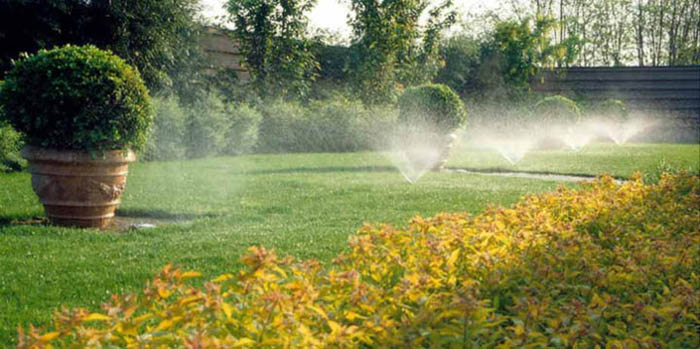
| Water is essential for life, including that of plants and flowers. An efficient irrigation system can undoubtedly be a great help in keeping garden plants healthy. Fig. 1. - Garden with irrigation We design a custom irrigation system for your garden. The first thing to do is evaluate the proper placement of the sprinklers, any drip lines, and the central well. The sprinklers we use can water at different angles (90°, 180°, 270°, 360°, or whatever you prefer) and are preferably positioned along the garden's perimeter. | ||
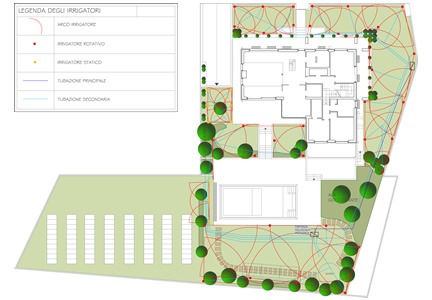
Fig. 2 - The garden is divided into three zones. The sprinklers have different spray angles depending on their placement. | ||
A problem with almost all systems is water pressure. A standard household line is generally sufficient to power five or six sprinklers at a time. Therefore, if the garden requires more sprinklers, different zones will be needed (see colors in the diagram). It's important that each zone has all the sprinklers of the same type.
| ||
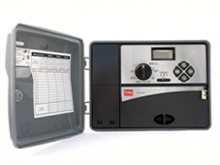
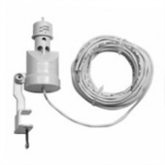
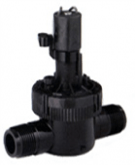
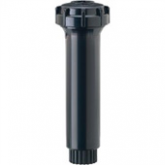
| Fig. 3: In the first box, starting from the left, you can see a control unit that controls the system. Immediately after, you can see a sensor used to stop irrigation in case of rain. In the third figure, you can see a solenoid valve used in automatic systems and finally a common pop-up garden sprinkler. | ||
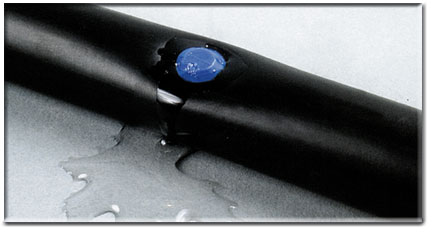
The irrigation system can be either manual (i.e., with the taps opened by hand) or automatic (with solenoid valves). Before deciding, consider the costs you're willing to incur. In any case, as already mentioned, the first thing to do is divide our garden (which may also include flowerbeds, tubs, terraces, and rockeries) into zones that will be supplied by a single hose; this hose should have a diameter proportionate to the number and type of sprinklers. Manual type: If you have opted for this method, you will have to make as many branches as there are zones, preparing a gate valve for each branch. If we opt for the automatic, Each zone will require a solenoid valve that must be connected to the control unit (which should be placed in a dry, weather-protected location), which will automatically manage the system. It goes without saying that an automatic system offers significant advantages. To sleep soundly while on vacation or to avoid getting up at four in the morning to turn on the system, automatic irrigation is the ideal solution. To prevent the system from starting even in rainy conditions or after heavy rainfall, it's a good idea to equip the system with a rain sensor. DRIP WING This method ensures less water waste and is an excellent solution for hedges, balconies, flowerbeds, and rockeries. It's a good idea to dedicate a specific area of the system to the drip line, as it typically needs to run much longer than sprinklers. Fig. 4 - Drip line | ||