



Red Thread (Laetisaria fusiformis)
This disease is a parasitic form of the fungus family. Fungi grow year-round and feed on nutrients from the lawn. The disease spreads across lawns in the form of spores. These spores are spread by wind, air, water, and human footfall.Red thread appears in spring and autumn, during humid periods when temperatures range from 16°C to 24°C. This disease is particularly severe on lawns that grow slowly due to nitrogen deficiency. The varieties most vulnerable to this disease are Poa, ryegrass, and bentgrass.
HOW TO RECOGNIZE THE RED THREAD
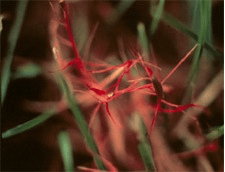
The first visible symptoms in spring are waterlogged areas of the lawn. Once dry, infected leaves will fade to a black-bronze color. Infected leaves mix with healthy ones, giving the lawn a ragged appearance. In wet periods, the fungus develops rapidly on the leaves and underside of the plant. The fungus produces coral-pink to dark red streaks or areas on the tips of brown grass leaves. The streaks can protrude up to two centimeters from the leaf and are easily visible, hence the name "red thread."
HOW TO TREAT THE RED THREAD
The Red Thread fungus invades rapidly, and leaves begin to die off just two days after infection. This makes Red Thread difficult to control. The best treatment for this disease is proper lawn care to keep it healthy. Some tips to follow are:
The first visible symptoms in spring are waterlogged areas of the lawn. Once dry, infected leaves will fade to a black-bronze color. Infected leaves mix with healthy ones, giving the lawn a ragged appearance. In wet periods, the fungus develops rapidly on the leaves and underside of the plant. The fungus produces coral-pink to dark red streaks or areas on the tips of brown grass leaves. The streaks can protrude up to two centimeters from the leaf and are easily visible, hence the name "red thread."
HOW TO TREAT THE RED THREAD
The Red Thread fungus invades rapidly, and leaves begin to die off just two days after infection. This makes Red Thread difficult to control. The best treatment for this disease is proper lawn care to keep it healthy. Some tips to follow are:
- Provide the right amount of nitrogen, as nitrogen-deficient lawns are more susceptible to this disease. Slow-release granular fertilizers provide lawns with the right amount of nitrogen over a long period of time.
- Avoid overwatering and avoid watering in the late afternoon or evening. Leaving the lawn wet overnight will cause disease spores to spread rapidly, causing even more damage.
- Reduce shaded areas that cause excess moisture in the lawn.
- Make sure the soil has good drainage. This allows moisture to remain trapped on the lawn's surface, thus promoting the spread of disease spores. Regular aeration helps loosen the soil and reduce moisture problems in the lawn. Aeration also improves water absorption and air circulation in the root zone.