
RING DEAD ZONES (various species)
This disease is a parasitic form of the fungus family. The fungi live in the soil and on infected leaves year-round.These fungi feed by stealing the nutrients they need from the grass.
The disease spreads through lawns through spores. These spores are spread by wind, air, water, and human foot traffic.
This disease appears when the lawn is subjected to various stress factors such as old age, temperature, or improper watering and mowing.
This disease typically appears on mature lawns over a year old, but it sometimes also affects recently sown lawns. Symptoms may intensify in clayey or very compacted soils.
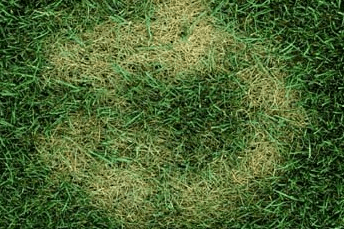
HOW TO RECOGNIZE DEAD ZONE DISEASE
Symptoms of this disease include the following:
HOW TO TREAT RING-SHAPED DEAD ZONES
This disease is difficult to control.
Correct your maintenance habits to limit the problem.
Below you will find some tips on what to avoid and what to do to prevent and treat ring dead zones:
Symptoms of this disease include the following:
- The disease creates yellowed rings on the lawn with healthy grass inside the ring.
- The leaves turn yellow like straw and die from the tip down.
- Due to the visual result, this disease is also called "frog-eye"
- Initially the zones are only 5-10 cm in diameter but can expand to reach 30-50 cm in diameter
- Although symptoms are most visible when the fungus is most active during wet and cold periods, the same symptoms can sometimes be seen during warmer seasons.
- During the hot and dry months the symptoms may reappear due to heat and water stress
HOW TO TREAT RING-SHAPED DEAD ZONES
This disease is difficult to control.
Correct your maintenance habits to limit the problem.
Below you will find some tips on what to avoid and what to do to prevent and treat ring dead zones:
- When the disease is in its early stages, the rings can be dug out with a shovel to rid the soil of disease spores. Remove the grass and soil to a depth of 15-20 cm. Wash the shovel and any other gardening equipment, including the mower, before using them again to prevent the spores from spreading. Rake the area, fill the hole with soil, and overseed the area with a ryegrass mixture, which is more resistant to the disease.
- If the area is very infected, removing all the rings is unreasonable
- Always give your lawn the right amount of water. Under normal circumstances, you need to water thoroughly and deeply, but if your lawn is infected with ring-shaped dead spots, it's best to water it in small amounts frequently.
- Don't water at night. Water left on the lawn overnight takes a long time to dry and encourages the spread of the disease through water droplets.
- Mow the lawn frequently at a height of 5-8 cm with a very sharp blade
- Give the right amount of phosphorus and potassium and spread slow-release nitrogen
- Check the soil's compactness, which can promote disease symptoms. Mechanical aeration helps loosen the soil.