
50 m2 of ready-made lawn in rolls
PRICE INCLUDES VAT AND SHIPPING.
Composition: 90% Festuca Arundinacea 10% Poa Pratense.
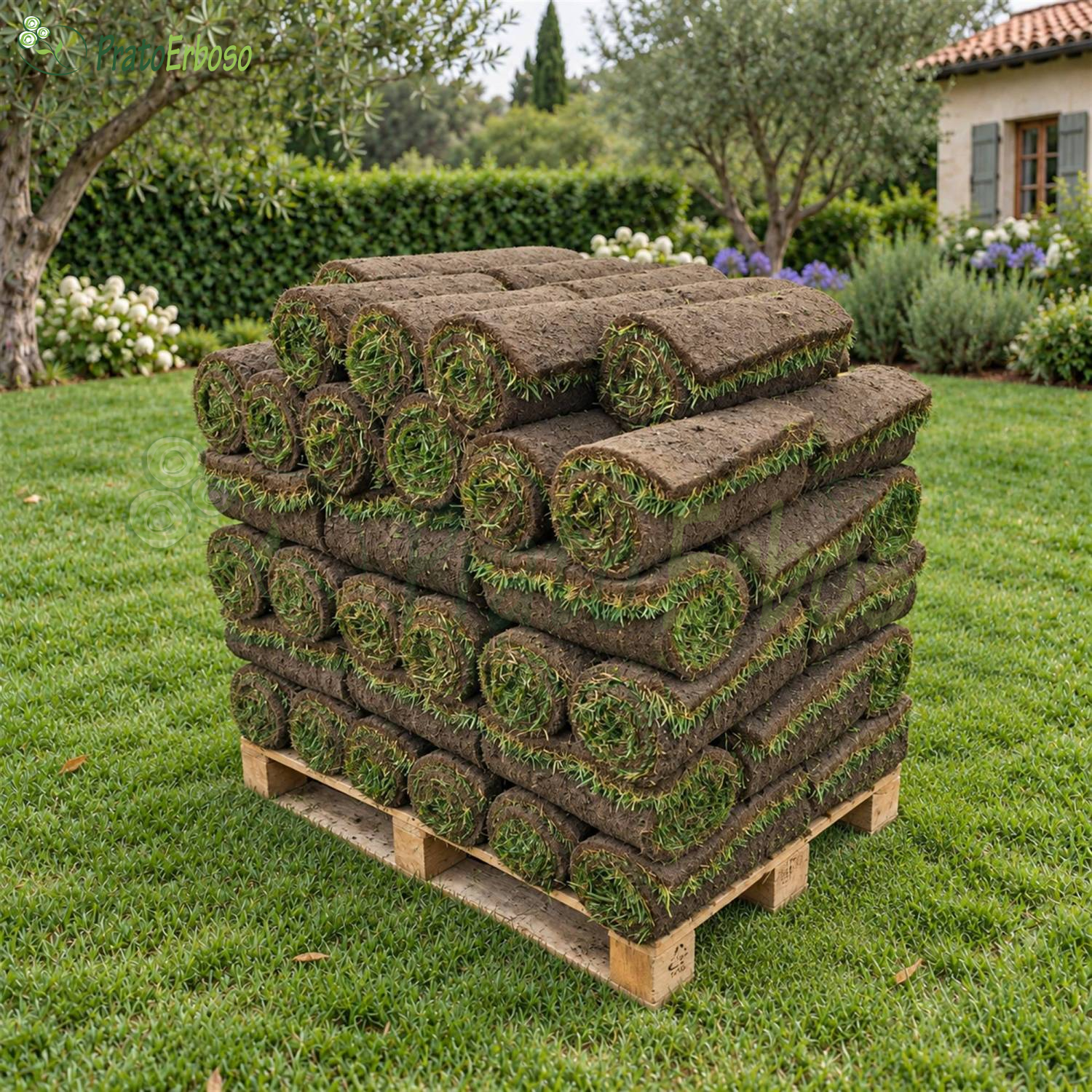
No. 1 pallet of 50 m2 , 100 rolls.
Delivery usually takes 5-6 days from ordering and 24-48 hours from collection, subject to notification from our delivery office.


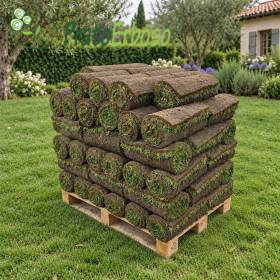


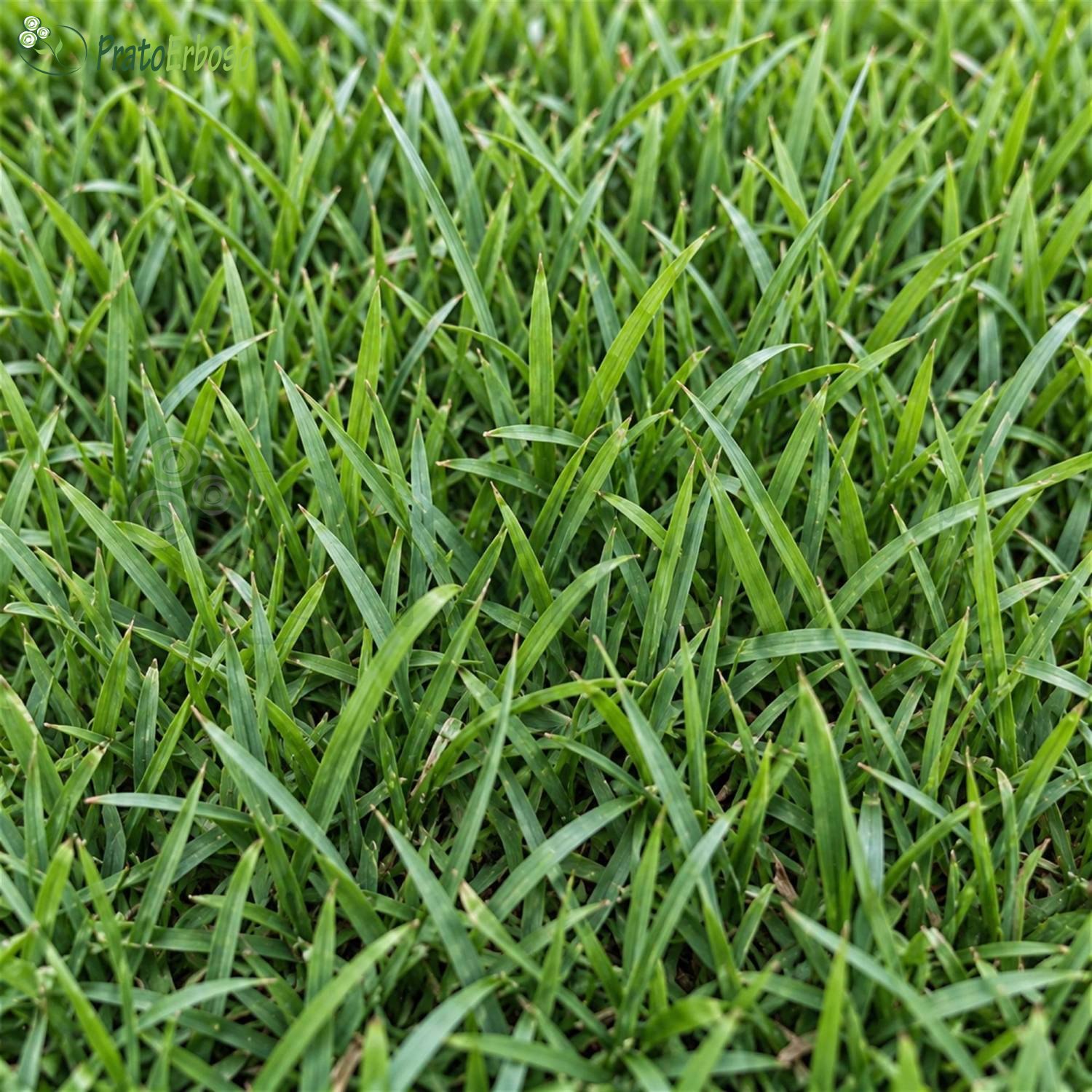
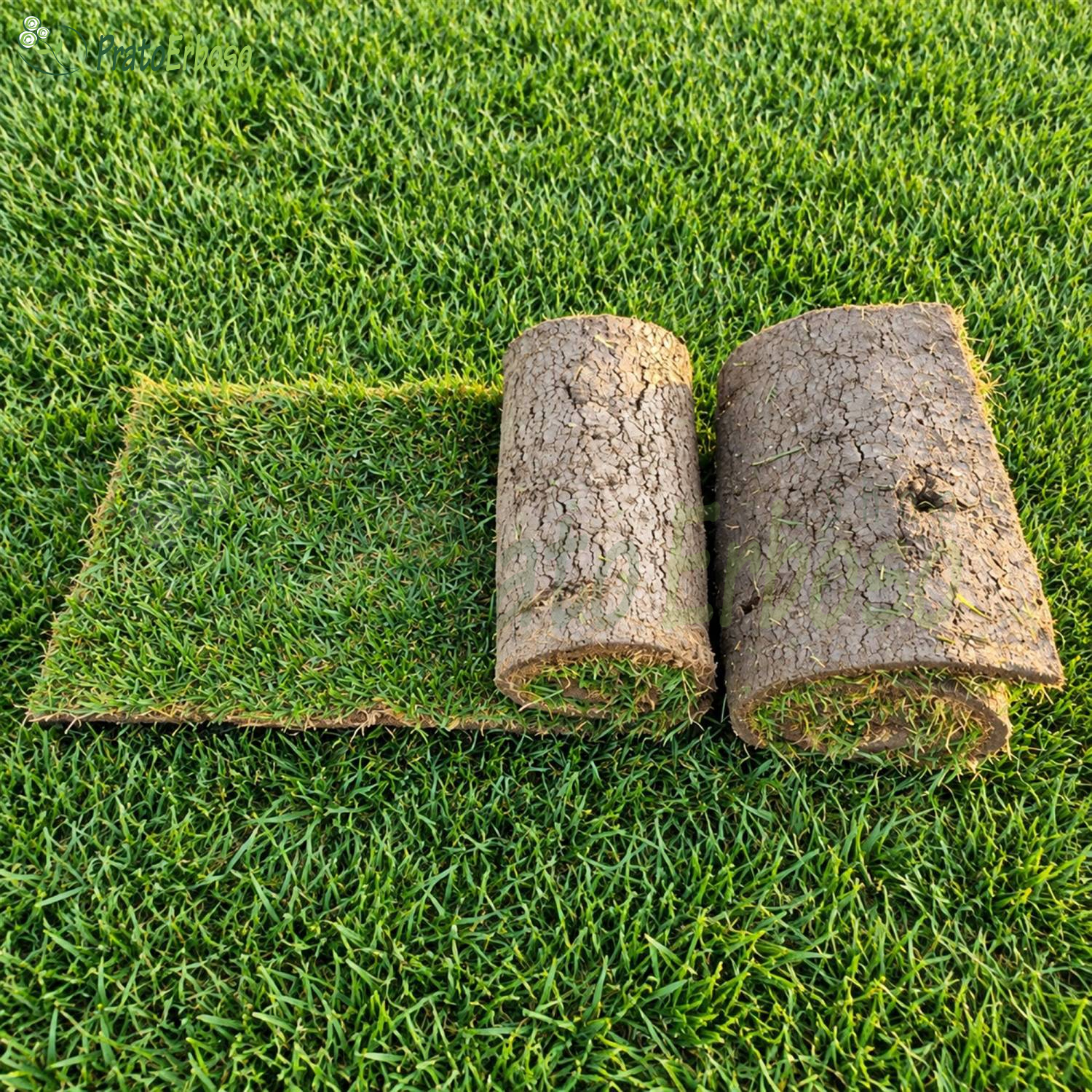
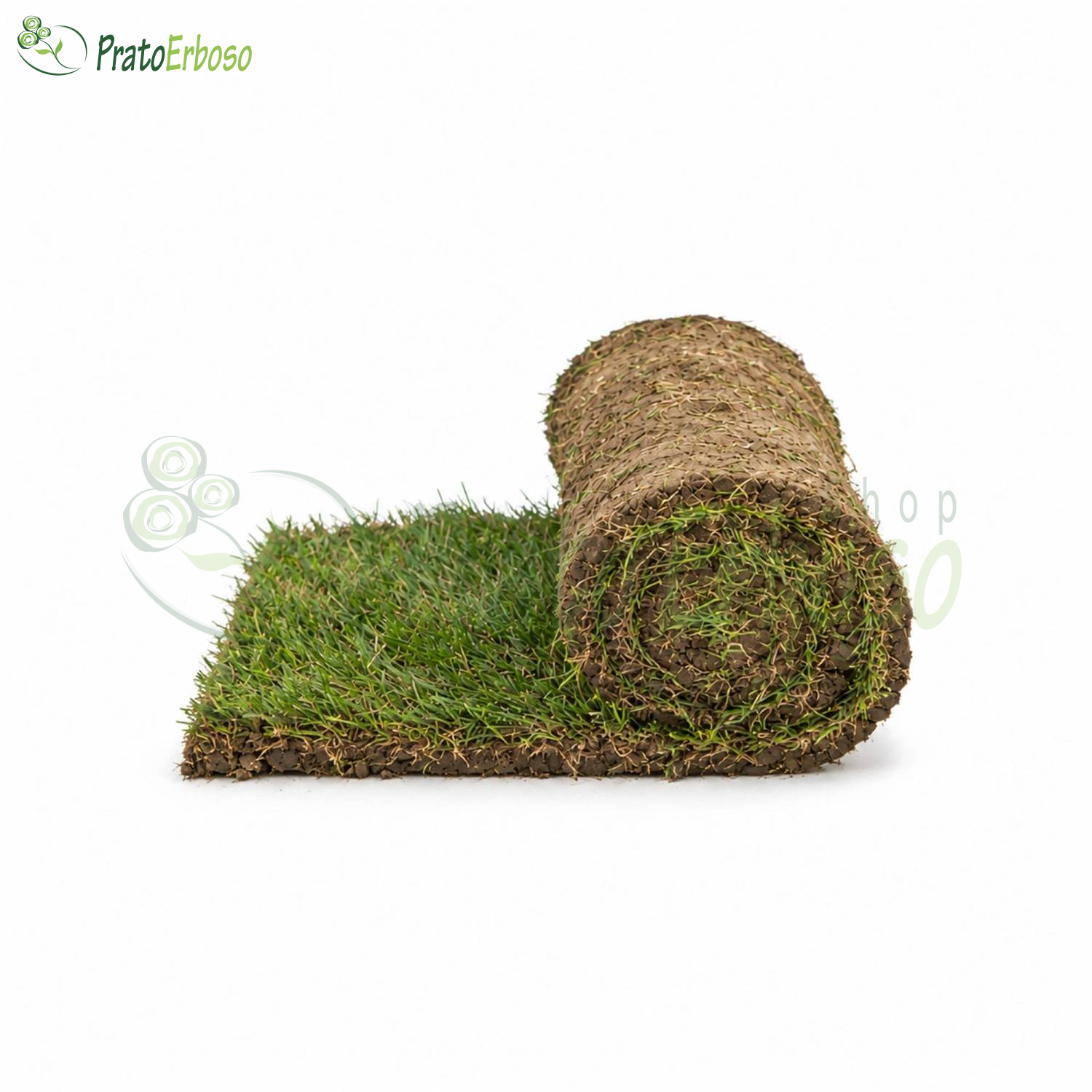
Rolled lawn made from a mixture of 90% tall fescue and 10% meadow grass. It's the most classic English lawn. Evergreen and resistant to trampling and shade.
Once placed on the ground, it will be sufficient to water it and the lawn will sink its roots into the soil.
Easy to establish thanks to a dense root system. Within a few days, it will fully establish, and you'll have a thick, full lawn of real grass.
Installation is simple and immediate.
This 80m2 pallet sales solution is designed for those who want to purchase turf rolls quickly and easily.
Delivery usually takes 5-6 days from ordering and 24-48 hours from collection, subject to notification from our delivery office.

- Tall fescue (%)
- 90
- Poa pratense (%)
- 10
- Cold resistance
- medium high
- Heat resistance
- average
- Resistance to trampling
- average
- Shadow resistance
- average
- Drought resistance
- average
- Resistance to salinity
- medium low
- Number of clods
- 160
- Thickness of the clod (cm)
- 1.5 - 2
- Sod size (cm)
- 125x40
- Species
- microthermal
- Maintenance
- average
Botanical composition of the meadow
- Tall fescue (%)
- 90
- Poa pratense (%)
- 10
Lawn performance and adaptability
- Cold resistance
- medium high
- Heat resistance
- average
- Resistance to trampling
- average
- Shadow resistance
- average
- Drought resistance
- average
- Resistance to salinity
- medium low
Rolled turf and sod
- Number of clods
- 160
- Thickness of the clod (cm)
- 1.5 - 2
- Sod size (cm)
- 125x40
Use and formulation of products
- Species
- microthermal
Packaging, maintenance, and warranty
- Maintenance
- average
It is necessary to lay the lawn within 24 hours of delivery to guarantee its integrity.
1. Tillage with removal of any residue of old lawn or weeds and large stones (small ones can also be left).
2. Preparation of the installation base by correcting the soil if it is excessively silty or sandy with the addition of silica or river sand or, alternatively, lapillus.
3. Accurate leveling to avoid harmful water stagnation. Keep the ground level 1-2 cm below the level of sidewalks or walkways in general.
4. Fertilization base with phosphorus-based fertilizer to stimulate the root development of the root ball.
5. Laying the lawn: carefully place the clods together, making the edges match (do not overlap). In very large plots, irrigate as you lay it to avoid dehydration of the lawn, especially in the summer season. Do not use small pieces of sod as they are quickly subject to dehydration.
6. Water abundantly as soon as the lawn is laid. Roll the ground to ensure that the carpet can adhere perfectly to the ground, thus eliminating air pockets that would prevent the turf from rooting. In the following days, make sure that the water supply always keeps both the root ball and the underlying soil very moist to help it root. It is advisable to water during the coolest hours of the day: early morning. After approximately 15-20 days after installation, depending on the period, you should no longer be able to lift the clods.
7. Gradually reduce irrigation, trying to accustom the turf to the lowest possible water supply depending on the soil, sun exposure and season.
8. First mowing of the lawn approximately 10 days after installation e always collection of the cut.
9. There are no seasonal limits for the installation of the lawn, but it is good practice, in case of installation at high temperatures, to prevent fungal attacks with specific products and never install in the presence of frozen ground.
10. Fertilizations: at least four basic annual fertilizations are recommended: early spring and late spring with ternary fertilizers with a prevalence of nitrogen content and early autumn and late autumn with ternary fertilizers with a prevalence of potassium content.
11. Fungicide treatment: it is recommended to carry out preventively, especially in the summer season.




Reviews (10) - Review moderation

Prato arrivato nei tempi stabiliti leggeri segni di tress ma una volta posato è diventato stupendo
It prodotto ho comprato un anno fa. 160 rotoli di erba, 2 bancali... Arrivato un giorno tardi, quindi dovuto mettere giù immediatamente, ma il terreno era già preparato, ma non avuto nessuno a aiutarmi. Quindi, ho fatto da sola, (donna di 47 anni), era lungo, ma abbastanza facile a lavorare con i rotoli. Ho guardato qualche video che mi aiutava. Ovviamente sarebbe stato più facile e ideale se c'era qualcuno altro... ma fattibile. Dovuto bagnare ogni giorni e era duranta giugno- l'estate quindi qualche giorni 2 volte al giorno e non camminare sopra per quasi 2 settimana... fino che l'erba era con radici, non può staccare dalla terra. venuta molto bello e anche oggi quasi un anno dopo è molto bello! io lo consiglio.
Azienda seria e molto competente,prima nel spiegare le tempistiche ,i vantaggi e il modo di posare il prato.i due bancali sono arrivati il giorno prestabilito,erba bene conservata . Molto bravi
Ottimo prodotto. Arrivato ed installato immediatamente il risultato è stato stupendo. Il personale cordiale e gentile sempre disponibile e competente.
Buon prodotto!
Prato semplicemente meraviglioso. Facile da stendere. Ha attecchito in una settimana. Verissimo e foltissimo.
Non è la prima volta che acquisto questo prodotto. Pienanente dodfusfatta!
Consegna puntuale ed agevole e prodotto ok.
Buon prodotto , rapporto pezzo qualità ottimo ,ditta seria
I BANCALI CON LE ZOLLE DI PRATO SONO ARRIVATI PUNTUALISSIMI VENERDI, ABBIAMO STESO IL PRATO SABATO MATTINA...ALL'INIZIO SEMBRAVA MALTRATTATO MA APPENA HA PRESO L'ACQUA IL SOLE E L'ARIA E' DIVENTATO VERAMENTE BELLO. SPERO DI ESSERE BRAVO A CURARLO.. GRAZIE DI TUTTO. DITTA AFFIDABILE E COSTANTE NEL TENERE I CONTATTI CON I CLIENTI...COMPLIMENTI